

The cause behind the color
What changes when a storm reaches your pool?
A green pool after rain usually needs more than a guess based on its color. Start with these four parts of the picture.
-
Rain adds water
A large amount of rain can lower the concentration of chemicals already in the pool. Test rather than assuming every shower caused a major change.
-
Debris adds demand
Windblown leaves and dirt give the sanitizer more to handle. Yard runoff can add another source of contamination if it enters the water.
-
Chlorine loses ground
When available chlorine is too low, algae has an opportunity to grow. Warm, sunny weather after the storm can add to the challenge.
-
Water flow needs attention
A stopped pump or loaded filter can complicate recovery. Check circulation alongside chemistry; adding treatment does not clear a clogged filter.
Observe first. Test next.
Green water is a clue, not a complete diagnosis.
Tell your pool professional whether the water is cloudy, whether the walls feel slippery, and whether the color changed before or after you added chemicals.
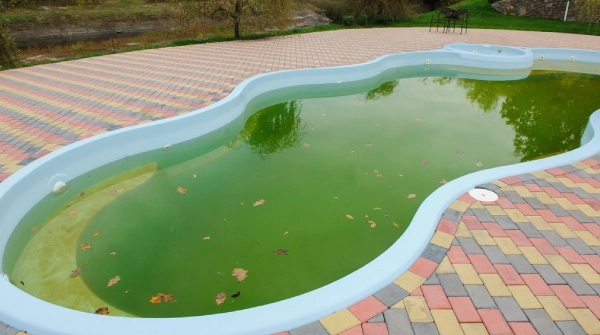
Cloudy green water or slippery surfaces
Algae may be involved. Record the current free chlorine and pH readings, along with what you can see, before deciding on treatment.
A green tint with otherwise clear water
Metals can also discolor water. A color change after adding chlorine deserves a closer look, rather than automatically adding more of the same product.
Soil, floodwater, or unusual contamination
Keep the pool closed and request a professional assessment. Explain where the water came from; this is a different situation from a few windblown leaves.
Your after-storm checklist
What can I safely check after the rain?
These observations help you describe the problem and choose your next step without guessing at chemical doses.
-
Wait until the storm has passed
Stay indoors while thunder is audible. The National Weather Service recommends waiting at least 30 minutes after the last thunder before returning outdoors. See lightning safety guidance.
-
Keep swimmers out and record the condition
Take a photo from the deck and note when the color changed. Do not swim in green or cloudy water, especially when you cannot clearly see the pool floor.
-
Look for debris and runoff
Once it is safe outside, skim accessible leaves from the surface. Note any mud, overflowing water, or yard drainage entering the pool. Avoid reaching into equipment or opening the filter.
-
Test the water before adding products
Measure free chlorine and pH with a suitable pool test kit. Tell your pool professional about stabilizer readings and any recent treatment. CDC recommends pH 7.0–7.8; chlorine guidance depends partly on whether stabilizer is used. Read CDC’s home pool testing guidance.
-
Check equipment from a safe position
Note whether the pump is running, water is returning to the pool, and the filter gauge differs from its normal reading. If electrical equipment is flooded or damaged, do not try to restart it.
Not sure what the readings mean? Have your test results, recent products, storm date, and pool photos ready when you request green pool help. Do not mix chemicals or guess at a treatment dose.
Circulation and filtration
Should I keep the pump running?
If the equipment is dry, undamaged, and operating normally, circulation supports the recovery process. The right schedule depends on your pump, water condition, and treatment instructions.
A running motor alone does not confirm good flow. Weak returns, lost prime, unusual noise, or a pressure change are reasons to ask for help.
The filter needs its own check
As a filter collects dirt, pressure can rise. Compare readings under the same operating conditions with the clean-filter baseline and follow the instructions for your specific model.
Do not open a pressurized filter
Filter service involves pressure and equipment-specific procedures. Leave maintenance to a qualified pool professional if you are unfamiliar with the system.
From green water to a usable pool
How long does recovery take?
There is no reliable deadline based on color alone. Starting water readings, debris, algae growth, and filter performance all affect the work. A pool that has been green for a while can need a different approach from one that changed overnight.
Start with the water and equipment
BrockStar’s green pool recovery service assesses water condition, relevant readings, circulation, and filtration before recommending the scope. Share recent storms, treatments, and any missed care so the starting picture is clear.
Look for progress beyond the color
Recovery may involve debris removal, brushing, treatment, filtration, and further testing. Ask what work is included, whether follow-up is needed, and what must be checked before swimming resumes. Clearer water alone does not establish that the pool is ready.
Keep a routine after recovery
Once the pool is ready, weekly pool care gives testing and cleaning a regular place in your schedule. Use the after-storm checklist between visits when the weather changes your water.
Common after-rain questions
Before you treat the water
Rain may trigger a change, but it is rarely the whole explanation. Check the sanitizer, water balance, debris, and equipment rather than assuming rainwater always requires the same treatment.
Keep swimmers out until the cause has been addressed, the water is clear, and testing confirms appropriate conditions. A lighter color is not a swimming clearance.
Test first. Treatment depends on the cause, pool volume, water readings, and product instructions. More chlorine is not the answer to every kind of discoloration.
Draining is not an automatic response to green water. BrockStar considers it only when the pool’s condition calls for it. Ask for an assessment before making that decision.
Request help if the pool is green or cloudy, keeps changing despite treatment, has poor circulation, or has received runoff. Include your Austin service address so availability can be checked for your location.